When planning to buy a home, it’s essential to understand the full cost of moving so you can budget accurately. From stamp duty and mortgage costs to legal fees and surveys, our cost of moving calculator helps you estimate all the expenses involved.
If you’re moving home, it will also factor in your existing equity and available funds, giving you a clear picture of how much you’ll have left to put towards your next purchase or use as a deposit.
Stamp duty figures based on rates effective from 1 April 2025.
Your home may be repossessed if you do not keep up repayments on your mortgage.
What Does It Cost to Move House?
The average cost of moving home in the UK is around £13,000, based on a £292,000 purchase. In practice, this varies significantly depending on the property price, whether you're buying, selling, or both, and how your purchase is structured.
Use our cost of moving house calculator to see exactly how these figures apply to your situation — but first, here's what goes into that total.
Stamp Duty
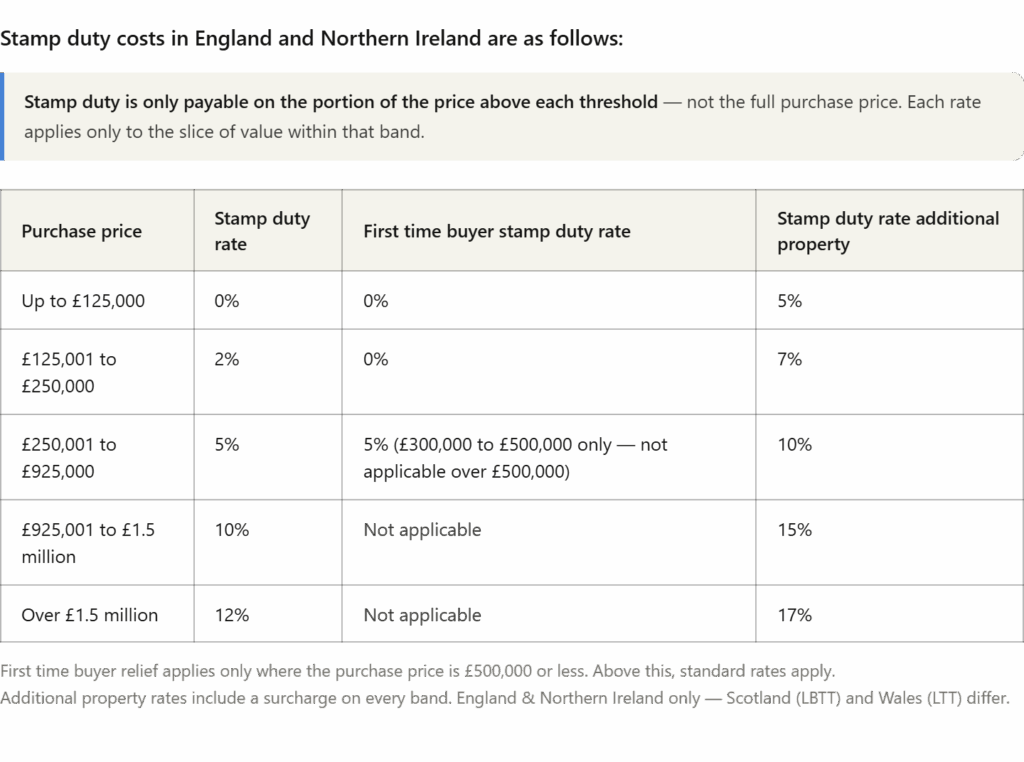
Stamp duty is usually the biggest single cost when buying a property, so it deserves attention before anything else.
The amount you pay depends on the purchase price, whether you're a first-time buyer, and whether you're buying an additional property. Rates are calculated in bands, so different portions of the price are taxed at different rates — it's not a flat percentage on the whole amount.
First-time buyers benefit from relief up to £300,000, meaning no stamp duty is owed below that threshold. If you're buying an additional property, a 5% surcharge applies on top of standard rates.
Stamp duty is paid on completion. Your solicitor will collect this in advance and handle the submission.
Conveyancing Costs
Conveyancing covers the legal work involved in transferring ownership. You pay for whichever side of the transaction you're involved in:
- Buying only: £1,900 – £2,500 (including VAT and disbursements)
- Selling only: £1,300 – £2,200
- Buying and selling: both fees apply
Costs are typically higher for leasehold properties, mortgaged purchases, and anything involving gifted or overseas deposits.
Most firms request £300–£500 upfront to cover searches, with the balance due on completion. When comparing quotes, always make sure VAT and disbursements are included — otherwise you're not comparing like for like.
Surveys
A survey is one of the most valuable things you can spend money on. It's worth being clear on the distinction between a mortgage valuation — which the lender arranges to protect themselves, not you — and a proper independent survey.
- Level 1 (£300–£900) is a basic condition report, suited to newer builds in good condition.
- Level 2 (£400–£900) is the most widely used option. It covers condition ratings, defects, and repair advice — suitable for most standard properties.
- Level 3 (£700–£1,500+) is a full building survey, recommended for older, larger, or non-standard properties. If you're buying somewhere that needs work, the extra spend here often pays for itself.
Survey fees are typically paid during the transaction, once the purchase is progressing.
Mortgage Costs
Mortgage arrangement fees usually fall between £0 and £999, though some products charge more. These can often be added to the mortgage rather than paid upfront — but it's worth factoring them into the overall cost of the deal, not just the monthly payment.
If you're selling a property with a mortgage still on it, you may also face early repayment charges if you're within a fixed-rate period. In some cases, porting the mortgage to your new property can help you avoid this.
Estate Agent Fees
If you're selling, estate agent fees are another significant line item. The UK average is around 1.42% including VAT, though this is negotiable — particularly on higher-value properties or in competitive markets. These fees are paid on completion.
Removal Costs
Removal costs vary depending on distance, volume, and access. As a rough guide:
- Smaller local moves: £300–£800
- Larger or more complex moves: £800–£2,000+
Packing services and storage will add to this.
When Are Costs Paid?
Understanding the timing matters as much as the amounts. As a general guide:
- Early in the process: Solicitor upfront payment (£300–£500)
- During the transaction: Survey fees
- On completion: Stamp duty, remaining legal fees, estate agent fees, removal costs
- Mortgage fees: Paid upfront or added to the mortgage
How to Plan the Full Cost of Moving
Many people focus on the deposit and monthly repayments, then get caught out by everything else. A good house moving cost calculator brings all of these figures together so nothing comes as a surprise.
It's also worth knowing that some costs can be managed through how the purchase is structured — for example, slightly increasing your borrowing to cover stamp duty or legal fees, while staying within lender limits. This depends on your affordability and loan-to-value position.
Our moving home calculator is built to show you what you're actually left with once every cost is accounted for — not just the headline property price.
At Strive, we focus on structuring the full move, not just the mortgage. If you'd like to talk through your numbers, we're happy to help.